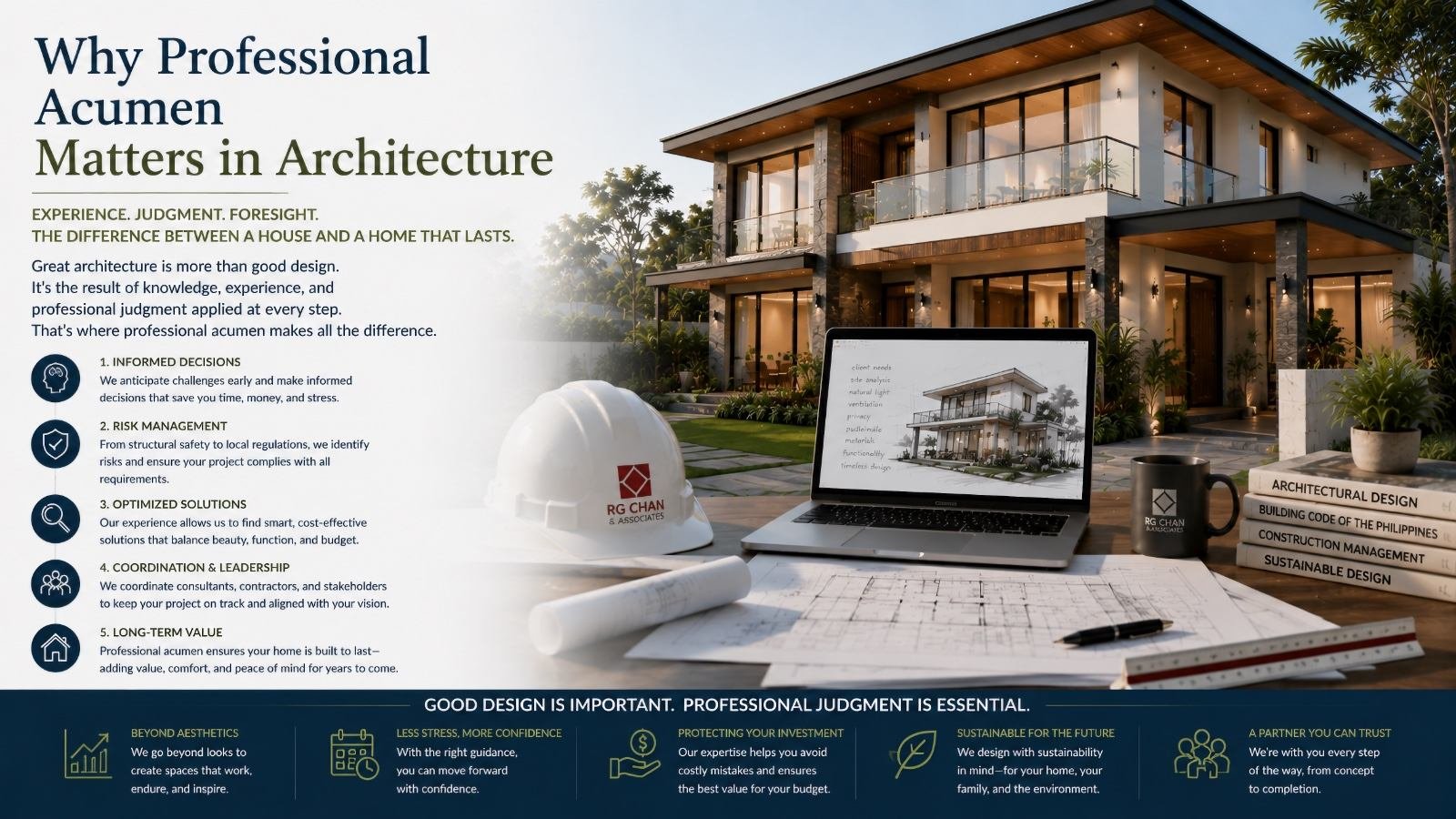
When people think about architecture, they often focus on design—the appearance of a building, its spaces, and its visual character. While design is certainly important, successful projects depend on much more than creativity alone.
Since founding RG Chan & Associates in 1982, I have come to appreciate that one of the most valuable services an architect provides is professional judgment. Over time, experience develops into something deeper: the ability to anticipate challenges, evaluate alternatives, and make informed decisions that protect a client's interests throughout the life of a project.
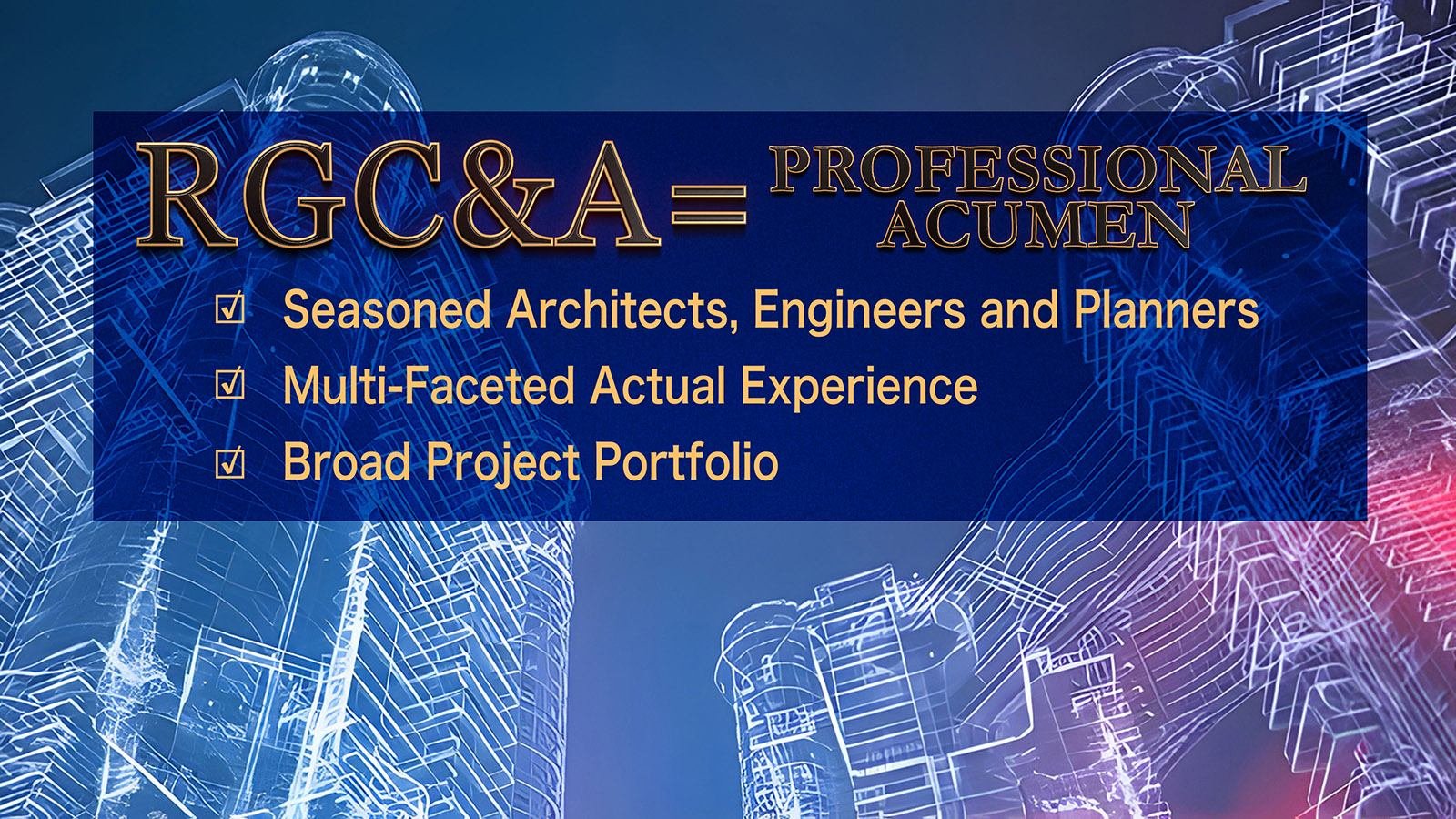
This is what I refer to as professional acumen.
Beyond Design
A building project involves countless decisions. Site conditions, budgets, regulations, structural systems, construction methods, materials, schedules, and long-term maintenance requirements all influence the final outcome.
While technical knowledge is essential, experience provides context. It allows professionals to recognize patterns, anticipate risks, and identify opportunities that may not be immediately obvious.
Professional acumen is not simply knowing what can be done. It is understanding what should be done in a given situation.
Informed Decision-Making
Every project encounters decisions that affect cost, quality, schedule, and performance.
An experienced architect evaluates these decisions not only in terms of immediate consequences but also in terms of long-term implications. Choices made during planning and design often influence construction costs, operational efficiency, maintenance requirements, and property value for years to come.
Informed decision-making helps clients avoid costly mistakes and proceed with greater confidence.
Managing Risk
Building projects involve risk. Regulatory requirements, site constraints, budget pressures, construction challenges, and unforeseen conditions can all affect project outcomes.
One of the most important benefits of professional experience is the ability to identify potential problems before they become expensive realities. Early recognition of risk often allows corrective measures to be implemented while options remain available and costs remain manageable.
The most effective problems are frequently the ones that never occur because they were anticipated in advance.
Finding Balanced Solutions
Architecture is often a process of balancing competing priorities.
Clients may desire ambitious design goals while working within budget limitations. A site may offer exceptional views while presenting engineering challenges. Sustainability objectives may need to be integrated with maintenance and operational considerations.
Professional acumen helps navigate these competing demands and identify solutions that balance aesthetics, functionality, durability, and cost-effectiveness.
The best projects are rarely the result of maximizing a single objective. They are the result of achieving the right balance among many objectives.
Leadership and Coordination
Modern building projects involve numerous participants, including consultants, engineers, contractors, suppliers, and regulatory agencies.
Successful project delivery requires coordination, communication, and leadership throughout the process. Experience helps maintain alignment among project participants while keeping the owner's objectives at the center of decision-making.
An architect's role often extends beyond design to include facilitating collaboration and helping guide the project toward a successful outcome.
Long-Term Value
Perhaps the greatest benefit of professional acumen is its contribution to long-term value.
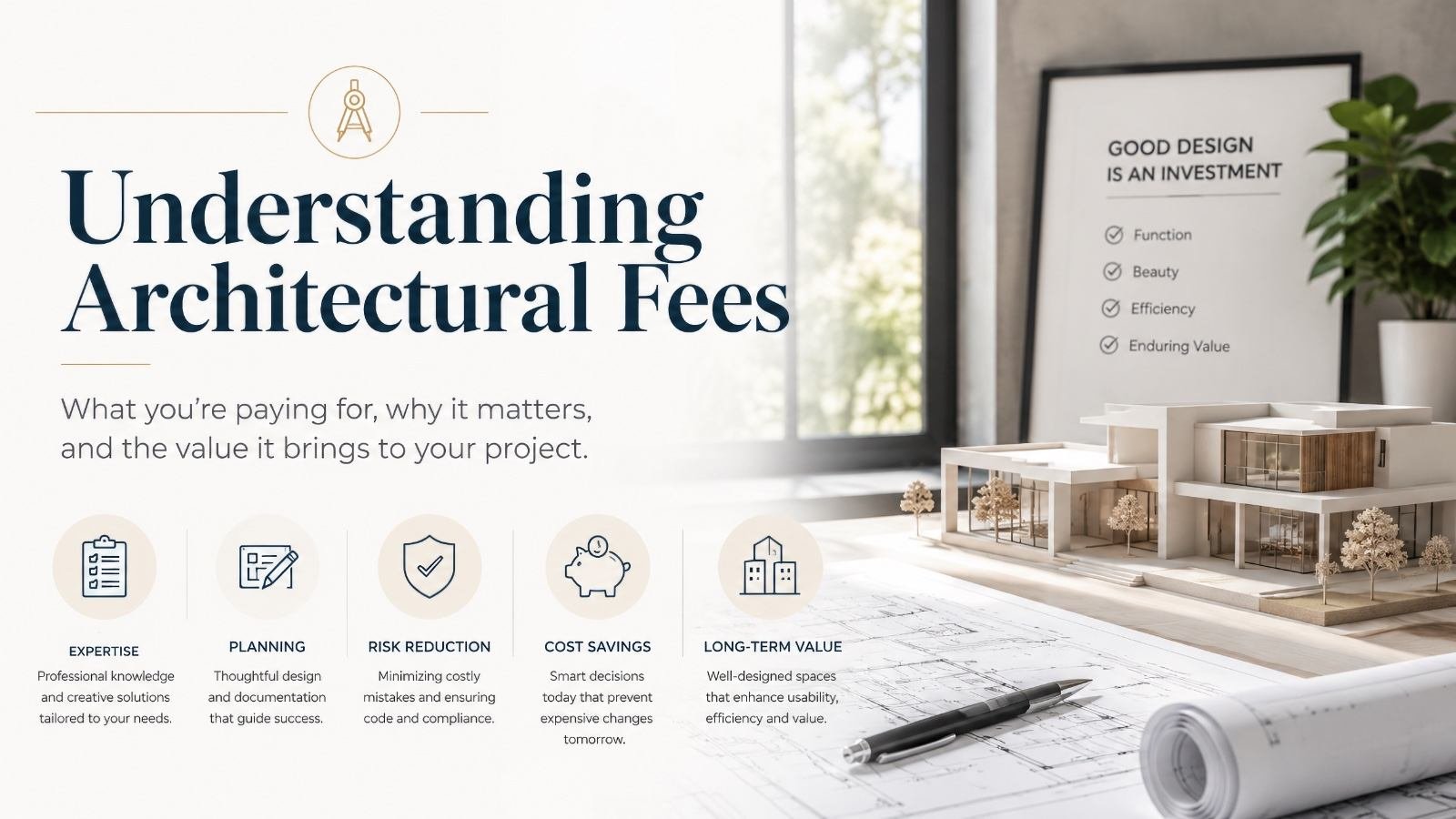
A well-designed and properly executed building should continue serving its owners for many years. Decisions made during planning and construction can affect maintenance costs, occupant comfort, adaptability, and overall performance long after the project is completed.
Professional judgment helps ensure that immediate decisions support long-term objectives.
The Value of Experience
At RG Chan & Associates, we believe architecture is not merely about creating attractive buildings. It is about helping clients navigate a complex process with confidence, clarity, and informed guidance.
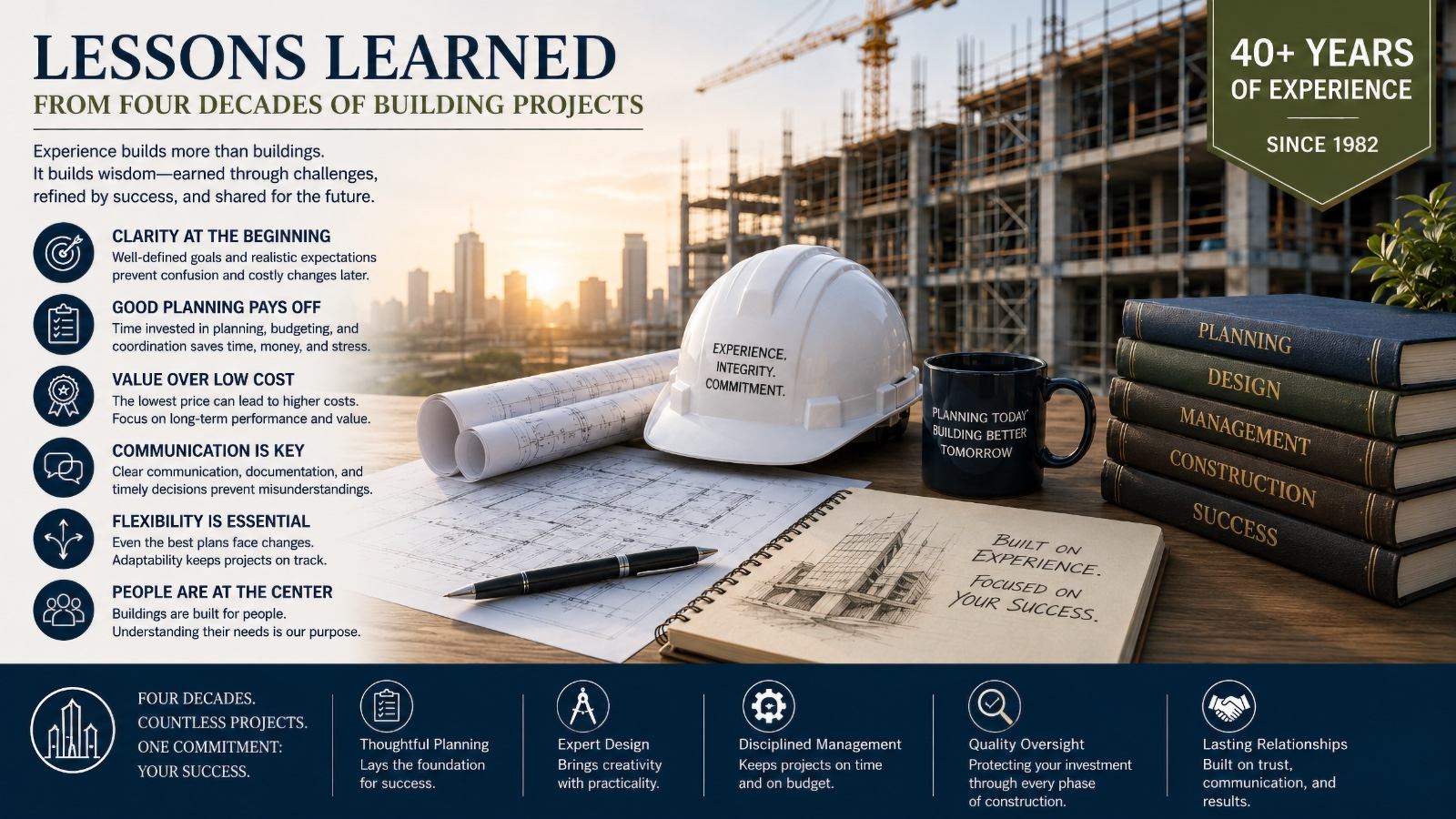
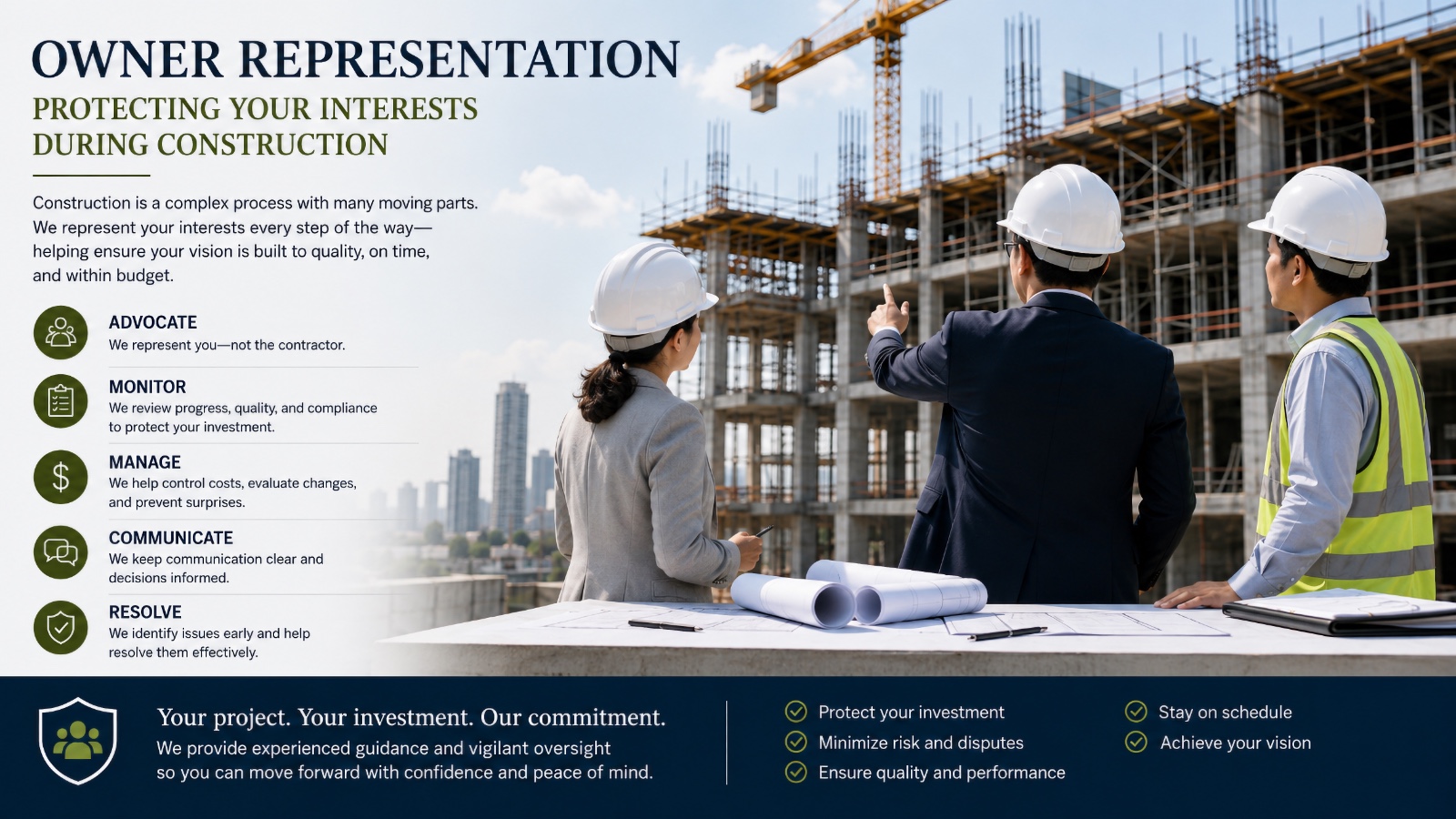
Our work draws upon decades of experience in project planning, architectural design, construction administration, and owner representation. Each project presents unique circumstances, but the principles of thoughtful analysis, disciplined decision-making, and professional integrity remain constant.
After more than four decades of practice, I remain convinced that good design is important, but professional judgment is essential. While creativity may shape a building's appearance, experience and foresight often determine its success.
In the end, professional acumen is what transforms knowledge into wisdom, challenges into opportunities, and a building project into a lasting investment.