When I established RG Chan & Associates in 1982, the architectural and construction industry was very different from what it is today. Drawing boards have largely been replaced by digital technologies, project delivery methods have evolved, and client expectations have become increasingly sophisticated. Yet despite these changes, many of the fundamental principles that determine project success have remained remarkably constant.
After more than four decades of professional practice, I am often asked what lessons stand out most from the many projects I have had the privilege to help plan, design, and manage. While every project has its own story, several recurring themes continue to emerge.
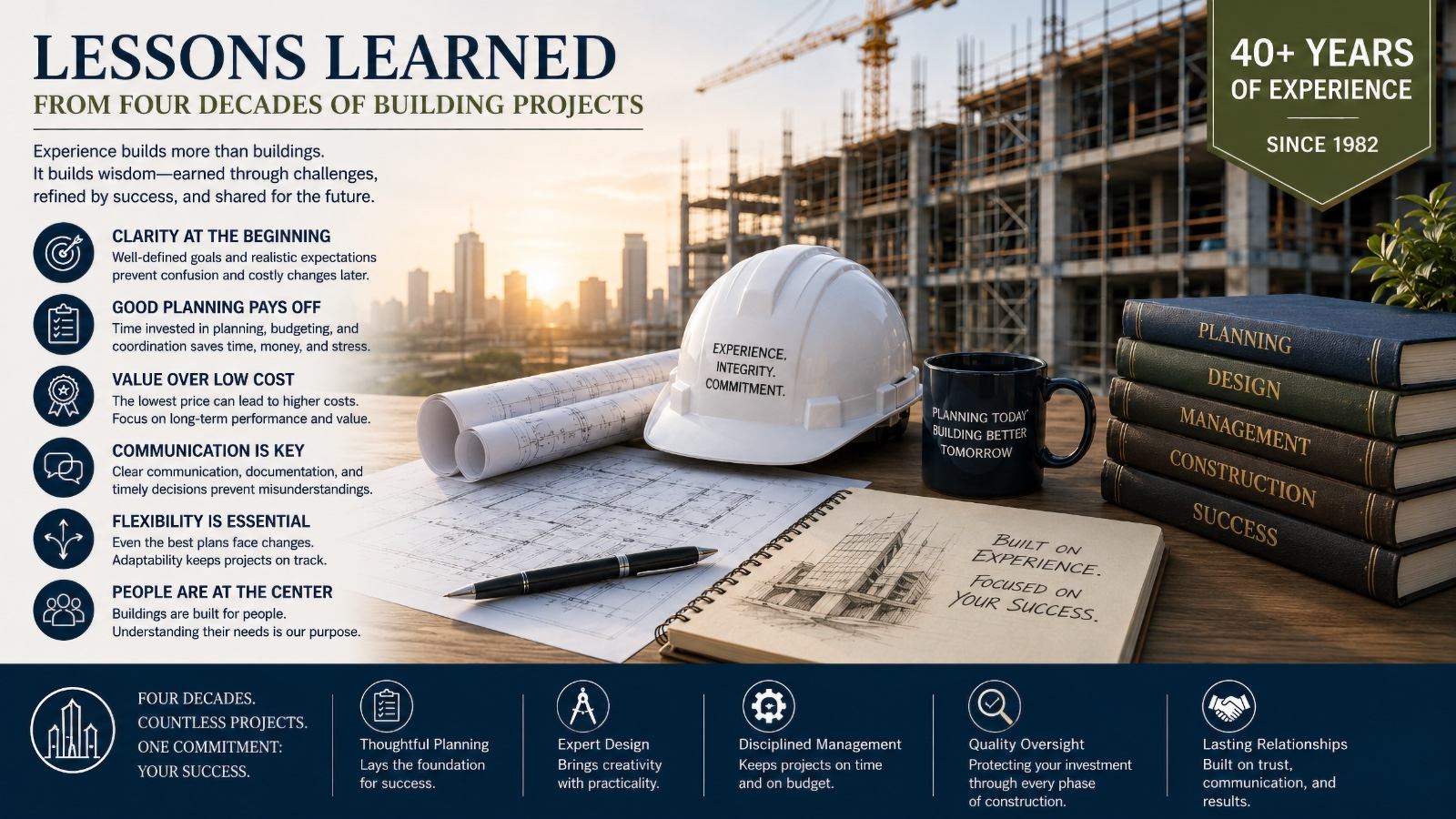
Lesson 1: Clarity at the Beginning Prevents Problems Later
Projects that begin with well-defined goals, realistic expectations, and a clear understanding of priorities generally encounter fewer difficulties during design and construction. Conversely, projects that begin with uncertainty often encounter costly revisions and delays as decisions are revisited along the way.
Lesson 2: Good Planning Always Pays Dividends
Some owners view planning as a preliminary step that delays progress. My experience has been exactly the opposite. Time invested in project planning, budgeting, scheduling, and coordination almost always pays dividends later.
Lesson 3: Value Is More Important Than Low Cost
Budget considerations are important, but selecting services, materials, or contractors solely on the basis of price can sometimes lead to disappointing results. The true measure of value lies in long-term performance, reliability, maintainability, and overall project success.
Lesson 4: Communication Is a Project Management Tool
Many construction challenges do not arise from technical issues but from misunderstandings among project participants. Clear communication, proper documentation, and timely decision-making can prevent many problems before they develop into disputes.
Lesson 5: Flexibility Is Essential
Even the most carefully planned projects encounter unexpected conditions, site constraints, market changes, regulatory requirements, and unforeseen circumstances. Site constraints, market changes, regulatory requirements, and unforeseen circumstances can require adjustments. Successful projects are those that adapt effectively while remaining focused on their original objectives.
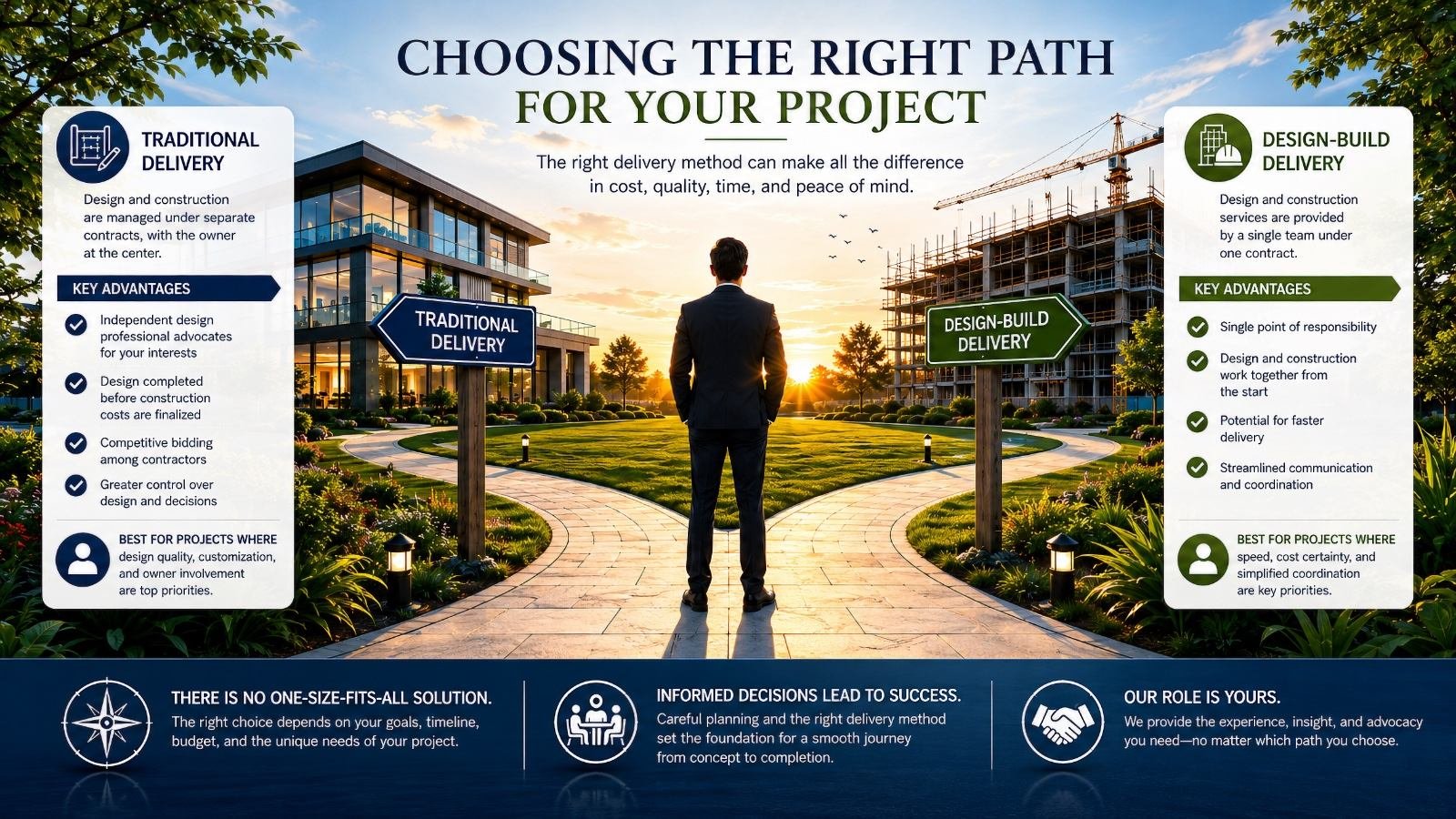
Lesson 6: The Right Delivery Method Matters
Whether a project follows a traditional architect-led process, a Design-Build arrangement, or another procurement method, the delivery system can significantly influence project outcomes. Owners who understand the implications of their choices are generally better positioned to achieve their desired outcomes.
Lesson 7: Buildings Are Ultimately About People
Architects, engineers, contractors, and consultants may focus on technical details, but the ultimate purpose of every project is to serve the individuals and organizations who will use it. Architects, engineers, contractors, and consultants may focus on technical details, but the purpose of every project is to serve the individuals and organizations who will use it. Understanding client objectives and maintaining that focus throughout the project remains one of the most important responsibilities of any design professional.
Applying These Lessons in Practice
At RG Chan & Associates, these lessons continue to shape the way we approach our work. We believe successful projects result from thoughtful planning, professional expertise, disciplined management, and a commitment to protecting our clients' interests from concept through completion.
Looking back over more than forty years of practice, I remain convinced that technology, materials, and methods will continue to evolve. However, the principles of careful planning, sound judgment, clear communication, and professional integrity will remain as important tomorrow as they were when I first opened the doors of the firm in 1982.
Lesson 8: Continuous Learning and Adaptation
During my career, few changes have been more significant than the profession's transition from manual drafting to CAD and, later, to Building Information Modeling (BIM).
From Manual Drafting to BIM: A Personal Journey
I began producing drawings entirely by hand on drafting boards, transitioned to Computer-Aided Design (CAD) during the emergence of AutoCAD in the Philippines, and later embraced Building Information Modeling (BIM) through Autodesk Revit.
The move from manual drafting to CAD transformed productivity and accuracy. The subsequent shift from CAD to BIM was even more profound, fundamentally changing how buildings are visualized, coordinated, documented, and managed.
Looking back over more than four decades of practice, I realize how fortunate I have been to experience the complete evolution of architectural documentation—from hand drafting, to CAD, and ultimately to BIM. Few architects have had the opportunity to work extensively within all three environments. While CAD remains the de-facto standard throughout much of the profession, BIM continues to present a demanding learning curve that has slowed its adoption among many practitioners. Embracing each technological transition required humility, persistence, and a willingness to learn anew. The experience reinforced a lesson that extends far beyond technology: successful professionals remain relevant by maintaining the curiosity, discipline, and adaptability required to learn continuously throughout their careers. Looking back, I consider this willingness to learn and adapt to be one of the most valuable investments I have made in my professional life.
Early Adoption of CAD Technology
RELATED PROJECT
The TI CAD Consultancy project marked a significant milestone in our technological evolution, helping pioneer the adoption of AutoCAD-based production methods in Baguio City and Northern Luzon during the early years of computer-aided drafting.
Texas Instruments CAD Consultancy
Early Adoption of Building Information Modeling
RELATED PROJECT
The Hotel Elizabeth project represents one of our earliest major applications of Building Information Modeling (BIM) using Revit in 2003. The project demonstrated the advantages of integrated digital coordination and marked an important step in our continuing commitment to innovation and professional growth.
Hotel Elizabeth Project