For many Filipinos living abroad, as well as foreign nationals with family or retirement plans in the Philippines, building a home represents more than a construction project—it is the realization of a long-term dream and a significant financial investment.
Having assisted clients in planning, designing, and managing residential projects since establishing RG Chan & Associates in 1982, I have found that successful projects follow a disciplined process. While every home is unique, the journey from concept to completion generally follows several important stages.
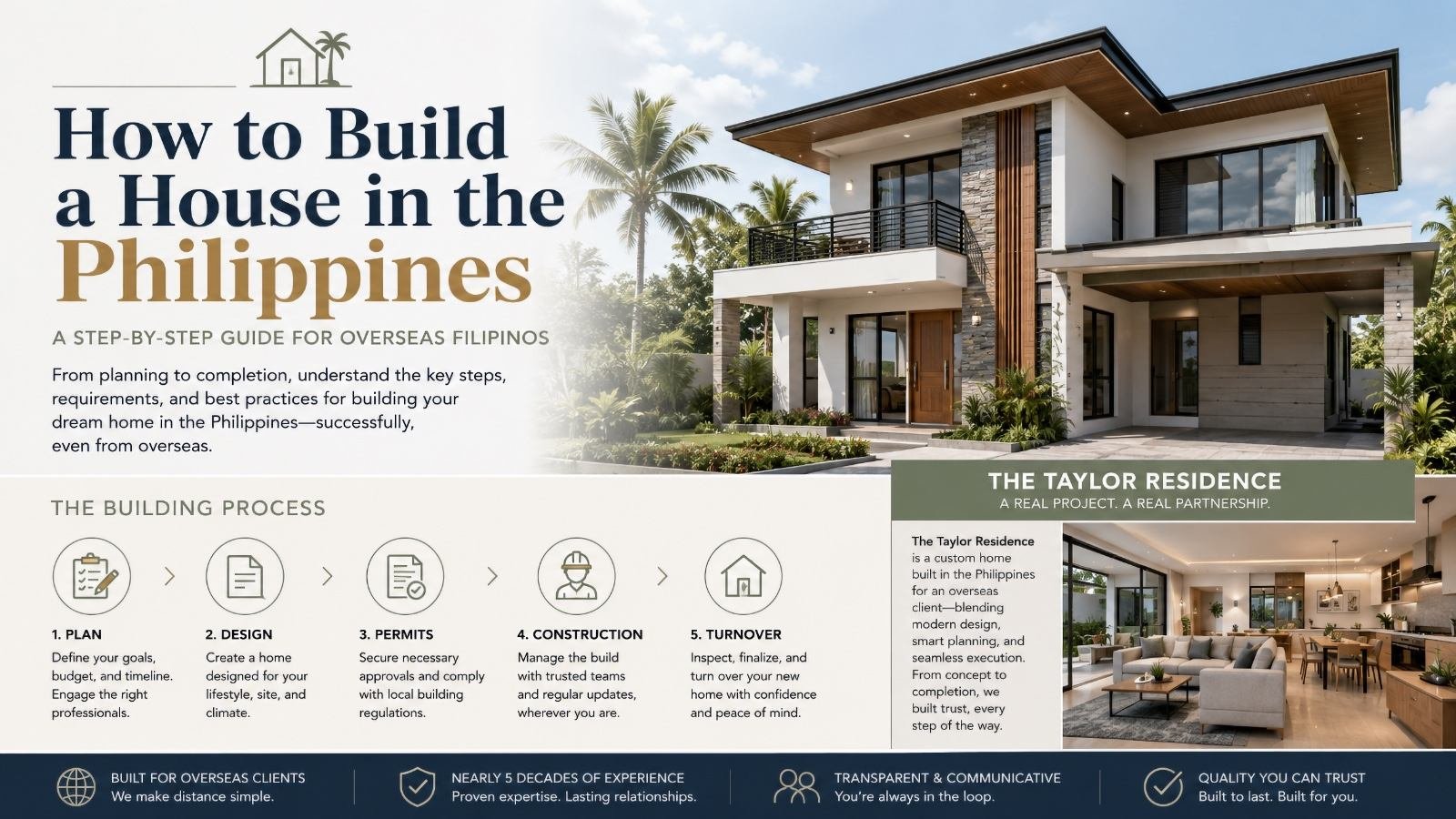
1. Plan and Set Your Goals
Every successful project begins with clarity. Before engaging designers or contractors, homeowners should establish their objectives, budget, desired completion date, and lifestyle requirements.
Questions to consider include:
* Will the home be a retirement residence, vacation property, or family home?
* How often will it be occupied?
* What level of maintenance will be acceptable?
* Are future expansion or accessibility requirements anticipated?
The more clearly these objectives are defined, the more effectively the project can be planned.
2. Design Your Home
The design phase transforms ideas into a workable solution. A qualified architect can help balance aesthetics, functionality, budget, site conditions, and regulatory requirements.
For overseas owners, good design becomes even more important because decisions made during this stage can reduce costly changes during construction. The design should respond not only to personal preferences but also to the Philippine climate, local construction practices, and long-term maintenance considerations.
A well-designed home should reflect the owner's lifestyle while remaining practical and buildable.
RELATED PROJECT
One of the earliest overseas residential projects undertaken by R.G. Chan & Associates was the Taylor Residence in Baguio City, completed in 1980. The owners, Mr. Leonard Brian Taylor and his wife, Ms. Mila Ringor Taylor, were living in West Germany at the time, years before Germany's reunification and long before email and video conferencing became available.
Despite the challenges of long-distance communication, the project was successfully completed through careful planning, clear coordination, and mutual trust. More than four decades later, the Taylor Residence remains a reminder that distance need not be a barrier to building a successful home in the Philippines.
The Taylor Project
3. Secure Permits and Approvals
Before construction can begin, the necessary permits and approvals must be obtained from local authorities.
Depending on the location and nature of the project, requirements may include zoning clearances, building permits, engineering documentation, and other regulatory submissions.
Many overseas owners underestimate the time required for this stage. Proper preparation and professional guidance can help avoid delays and ensure compliance with local regulations.
4. Build Your Home
Construction is where planning becomes reality. Selecting qualified contractors, suppliers, and consultants is one of the most important decisions an owner will make.
While it may be tempting to focus primarily on the lowest proposal, experience has shown that quality, competence, reliability, and project management capability are often better indicators of long-term value.
Successful construction depends upon clear documentation, realistic scheduling, effective communication, and disciplined supervision.
5. Inspect and Monitor Progress
Construction should never be viewed as a process that runs on its own. Regular monitoring helps ensure that work complies with approved plans, specifications, quality standards, and budget expectations.
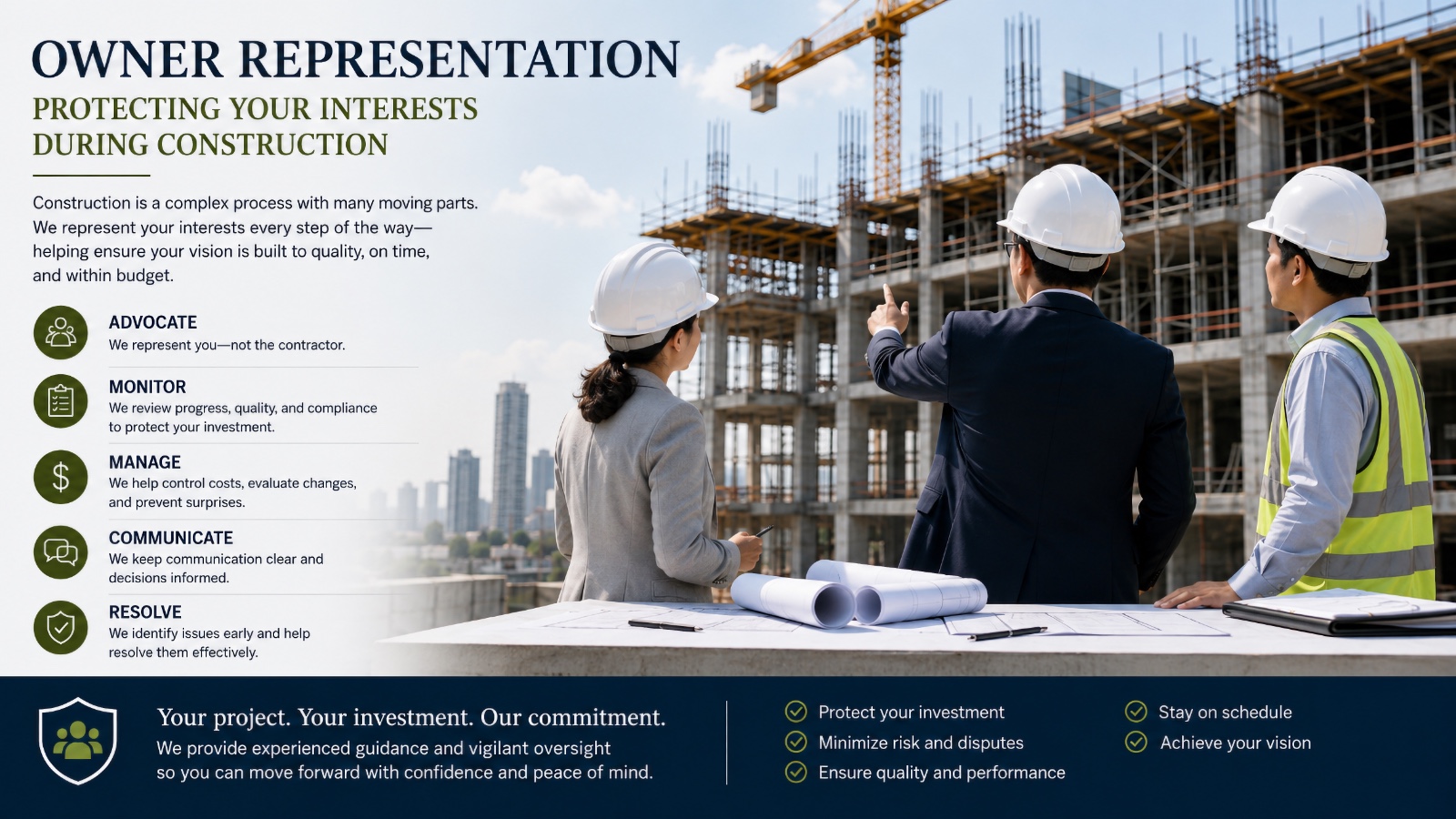
For owners residing overseas, project monitoring becomes especially important. Periodic inspections, progress reviews, documentation, and professional oversight can help identify issues before they become costly problems.
Maintaining visibility throughout construction helps protect both the project and the owner's investment.
6. Turn Over and Move In
The final stage includes inspections, testing, documentation review, and project turnover. Before accepting the completed home, owners should verify that all agreed work has been completed and that necessary records, warranties, manuals, and permits are in order.
A proper turnover process helps ensure a smooth transition from construction to occupancy.
Building with Confidence
Building a house in the Philippines can be a rewarding experience when approached with careful planning and the right professional team. Architects, engineers, contractors, and project managers each play important roles in transforming a vision into a completed home.
For overseas clients in particular, success depends on more than good construction. It requires clear objectives, thoughtful design, disciplined project management, and consistent oversight throughout the process.
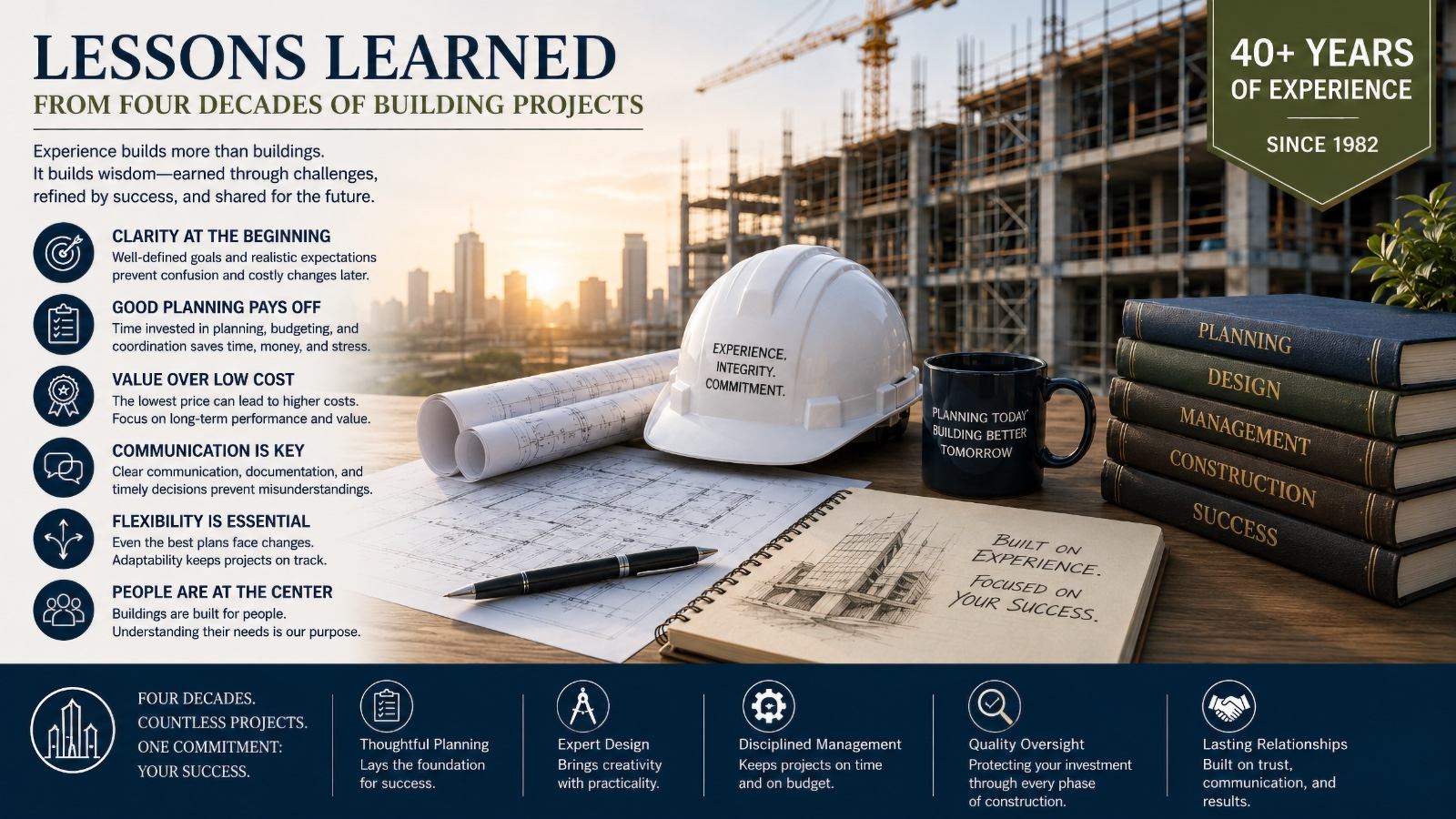
After more than four decades of professional practice, my advice remains straightforward: take the time to plan properly, assemble the right team, and follow a structured process. A home built with care and professional guidance will not only meet today's needs but continue to provide value, comfort, and enjoyment for generations to come.