Baguio Palace Hotel
Project Details
Location : Legarda Road, Baguio City, Philippines
Owner : Big K Super J Corporation
Enclosed Floor Area : 2,553 square meters
Completed in: 1989
Project Description
The Baguio Palace Hotel was conceived as a contemporary hospitality development designed to serve both the growing tourism market and the evolving business needs of Baguio City. Developed for Big K Super J Corporation, the project sought to combine operational efficiency, guest comfort, and distinctive architectural character within a compact urban site. The result is a hotel concept that balances commercial practicality with a refined and enduring architectural expression.
From the outset, the design focused on maximizing the development potential of the property while maintaining the quality of the guest experience. The building was carefully planned to accommodate a substantial number of guestrooms, supported by essential hospitality amenities and service facilities, all organized within an efficient vertical layout. Every aspect of the planning process was guided by a commitment to operational effectiveness, ensuring that guest accommodations, circulation systems, and support functions work together seamlessly.
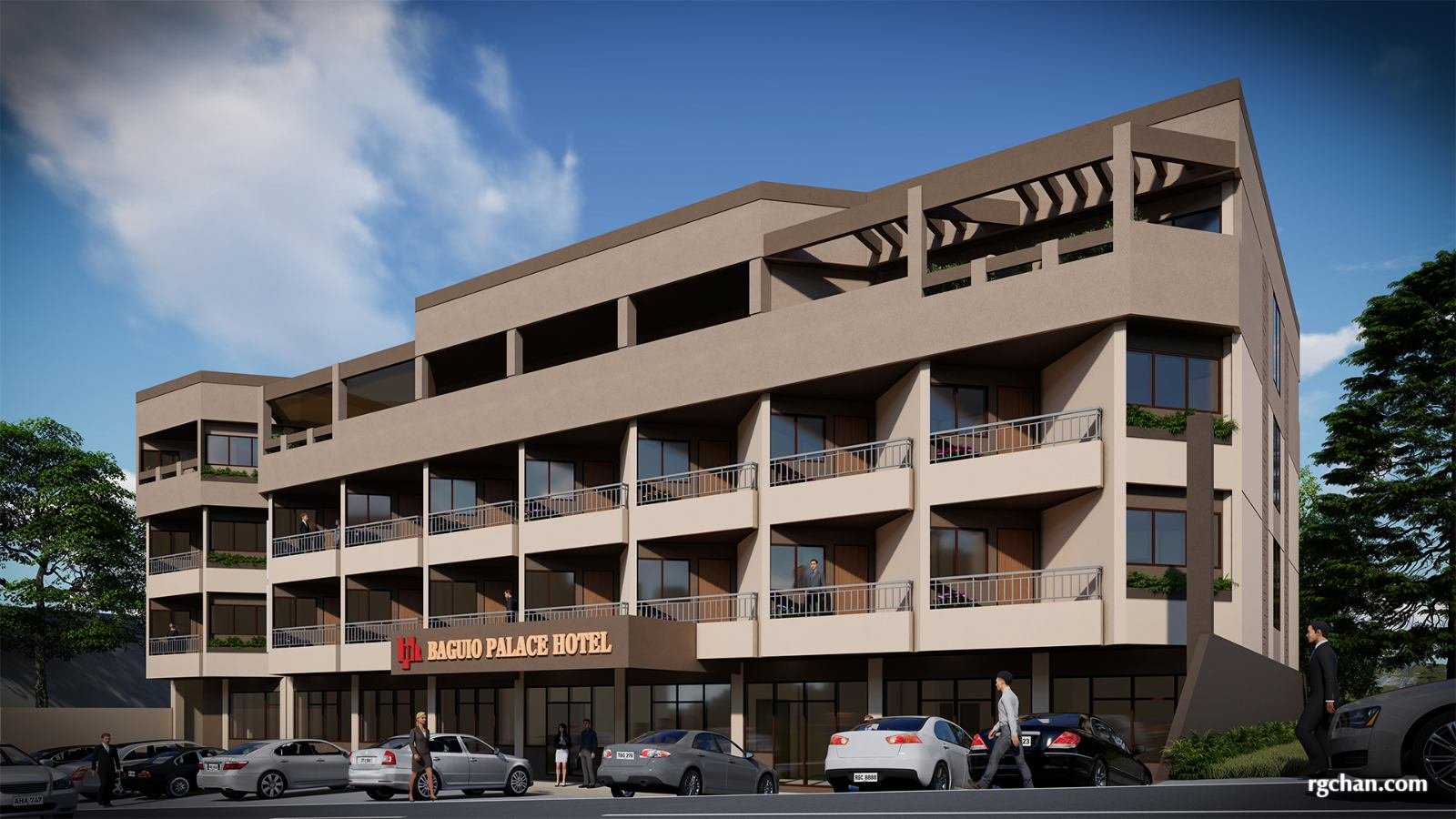
A defining feature of the project is its response to the mountain climate of Baguio City. The building's orientation was carefully studied to minimize heat gain and maximize occupant comfort. Direct exposure to harsh morning and afternoon sunlight was reduced through the strategic placement of openings and the use of recessed balconies, projecting walls, and deep overhangs. These elements not only improve environmental performance but also contribute to the building's distinctive architectural identity.
The guestroom floors were designed around well-proportioned accommodations that exceed minimum hospitality standards, providing visitors with comfortable and functional living spaces. Private balconies extend many of the rooms, allowing guests to enjoy the city's cool climate and scenic surroundings while introducing natural light and ventilation into the interiors. This emphasis on openness and connection to the outdoors enhances the overall quality of the guest experience.
Crowning the development is a penthouse level envisioned as a private family residence for the owner. Rather than appearing as a separate element, the penthouse is carefully integrated into the overall composition, maintaining the architectural coherence of the building while providing an exclusive residential retreat above the hotel operations. This mixed-use arrangement reflects the project's efficient use of space and thoughtful response to the client's specific requirements.
Architecturally, the building derives its character from a dynamic composition of angled balconies, layered wall planes, and carefully proportioned openings. The oblique geometry of the façade creates depth, shadow, and visual movement, giving the hotel a strong identity while avoiding unnecessary ornamentation. The restrained palette of materials further reinforces the project's contemporary character, allowing proportion, form, and light to become the primary design elements.
Beyond its role as a hospitality facility, the Baguio Palace Hotel was envisioned as an investment in the city's tourism infrastructure. The project demonstrates how thoughtful planning and climate-responsive design can create accommodations that are both economically viable and architecturally memorable. By combining efficient operations, guest-centered planning, and a distinctive visual presence, the development offers a model for contemporary hotel design in the mountain environment of Northern Luzon.
The Baguio Palace Hotel remains a compelling example of RGC&A's approach to hospitality architecture—one that integrates environmental responsiveness, commercial practicality, and timeless design into a cohesive and enduring architectural vision.